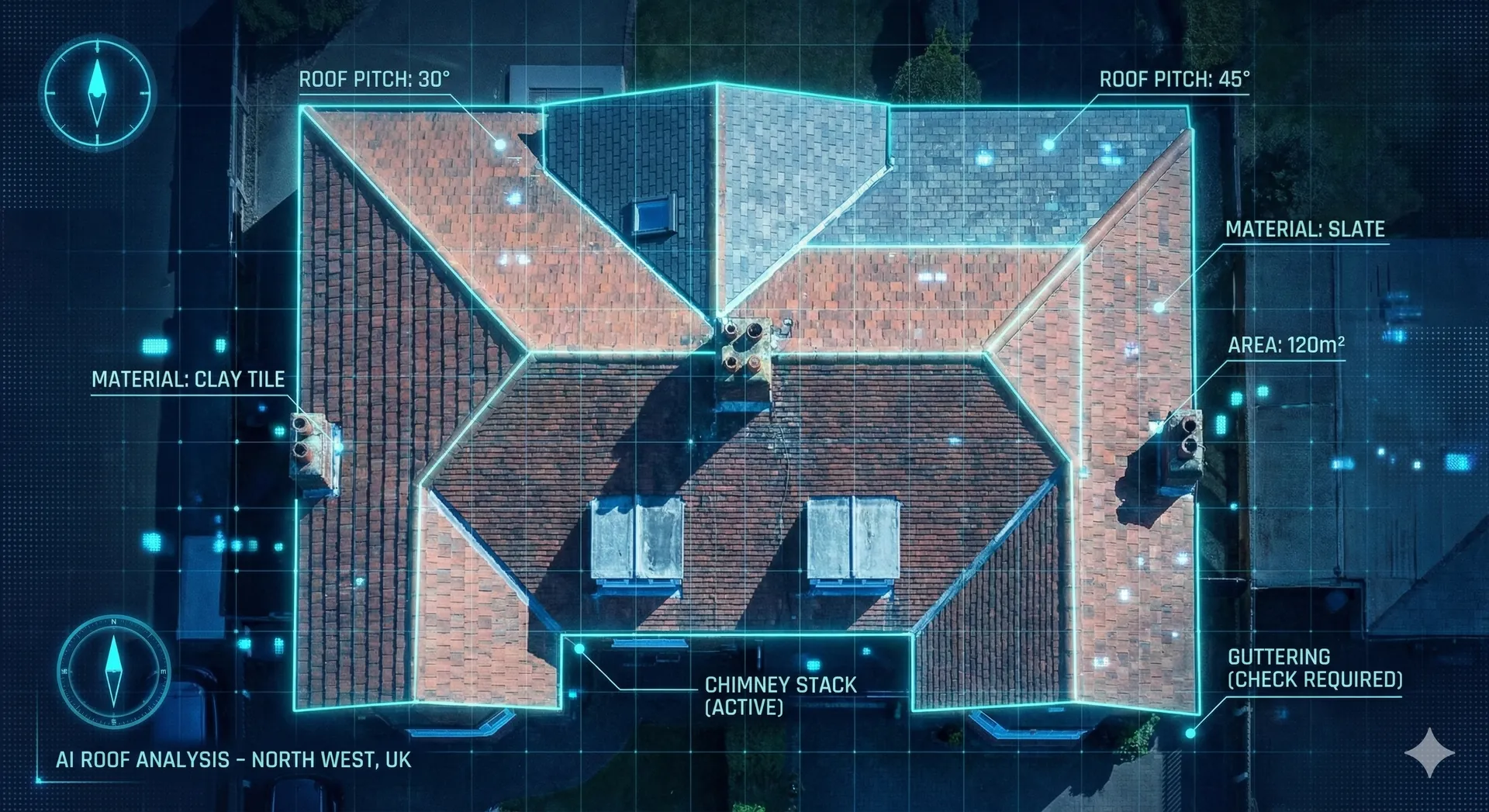
A roofing receptionist should ask seven things on a first contact: the caller's name and number, the property postcode, the type of job, how urgent it is, a rough budget bracket, the property type and access, and how they found you. Get those seven and the roofer calls back ready to quote. Miss them and you're calling back a mystery.
The Seven Core Questions
1. "Can I take your name and the best number to reach you?"
Obvious, but it needs to come first and be confirmed back. A voicemail's most common failure is an unusable callback number. Whoever (or whatever) answers should repeat the number to the caller before moving on.
2. "What's the postcode of the property?"
The single fastest filter. A postcode instantly tells you whether the job is inside your service area — before anyone spends twenty minutes on details. It also lets you cluster surveys geographically instead of criss-crossing the county.
3. "What kind of work do you need — a repair, a full re-roof, flat roof, guttering?"
Job type sets everything downstream: who should call back, how fast, and roughly what the job is worth. Offering categories ("repair or replacement?") gets clearer answers than an open "what's the problem?", because most homeowners don't know roofing vocabulary.
4. "How urgent is it — is water coming in right now?"
This is the triage question. An active leak or storm damage needs a callback within the hour and possibly an emergency slot; a "we're thinking about re-roofing next year" enquiry needs a courteous follow-up plan. Treating both the same wastes emergencies and pesters browsers.
5. "Do you have a rough budget in mind?"
The awkward one — and the one that saves the most wasted site visits. Asked neutrally ("just so we point you the right way — is this a few hundred pounds of repair or a bigger project?"), most homeowners answer honestly. A £300 expectation for a £5,000 job is better discovered on the phone than on the driveway.
6. "Is it a house or a commercial building — and can we get access easily?"
Terrace, semi, bungalow, three-storey townhouse or warehouse changes the equipment, the scaffolding conversation and sometimes whether you want the job at all. Access — parking, rear alleys, conservatories under the work area — shapes the quote.
7. "How did you hear about us?"
Thirty seconds that tells you which marketing actually pays. If you never ask, you'll keep paying for channels that don't bring work and underfeeding the ones that do.
Questions Not To Ask On A First Call
- Exact measurements or technical details. The homeowner doesn't know their rafter spacing. That's what the survey is for. Once the survey measurements are in, use our free UK roof pitch calculator to turn the rise and run into a pitch and slope factor for the material take-off.
- "When can you be home for a two-hour appointment?" Too much commitment before trust is built — offer the callback first.
- Payment or deposit questions. Money before value scares off legitimate enquiries.
- A long form's worth of anything. Seven quick questions is a conversation; twenty is an interrogation. Every extra question loses a share of genuine callers.
Who Asks The Questions Matters Less Than You'd Think
A trained office manager, a well-designed SMS conversation and an AI voice receptionist can all collect these seven answers. What actually differs is availability and consistency: a human asks them brilliantly 40 hours a week; an automated system asks them identically at 2am on a Sunday, on the fifth call in ten minutes after a storm, and never forgets the postcode.
That's exactly how RoofFlow's roofing answering service works: the questions above are the default script, tuned to your service area and preferences during setup, and every answer arrives on your phone as a structured summary. You can hear it ask them yourself on the live demo — 07700 165250.
Roger Malek
Founder of RoofFlow — the AI receptionist and missed-call recovery service for UK roofing companies, built in Manchester.
LinkedInRelated Articles
Hear These Questions Asked — Live
Call the demo line and the AI receptionist will qualify you exactly as it would your customers.